Śavāsana & a short meditation
Every practice completes itself in rest. The body is released, the breath is left alone, and awareness turns inward to observe. What was moved and breathed is allowed to settle.
Śavāsana
शवासनCorpse pose · the practice of rest
- What it is
- Lying completely still, the body released, awareness awake. Every practice ends here, and it is a practice in itself.
- How to practise
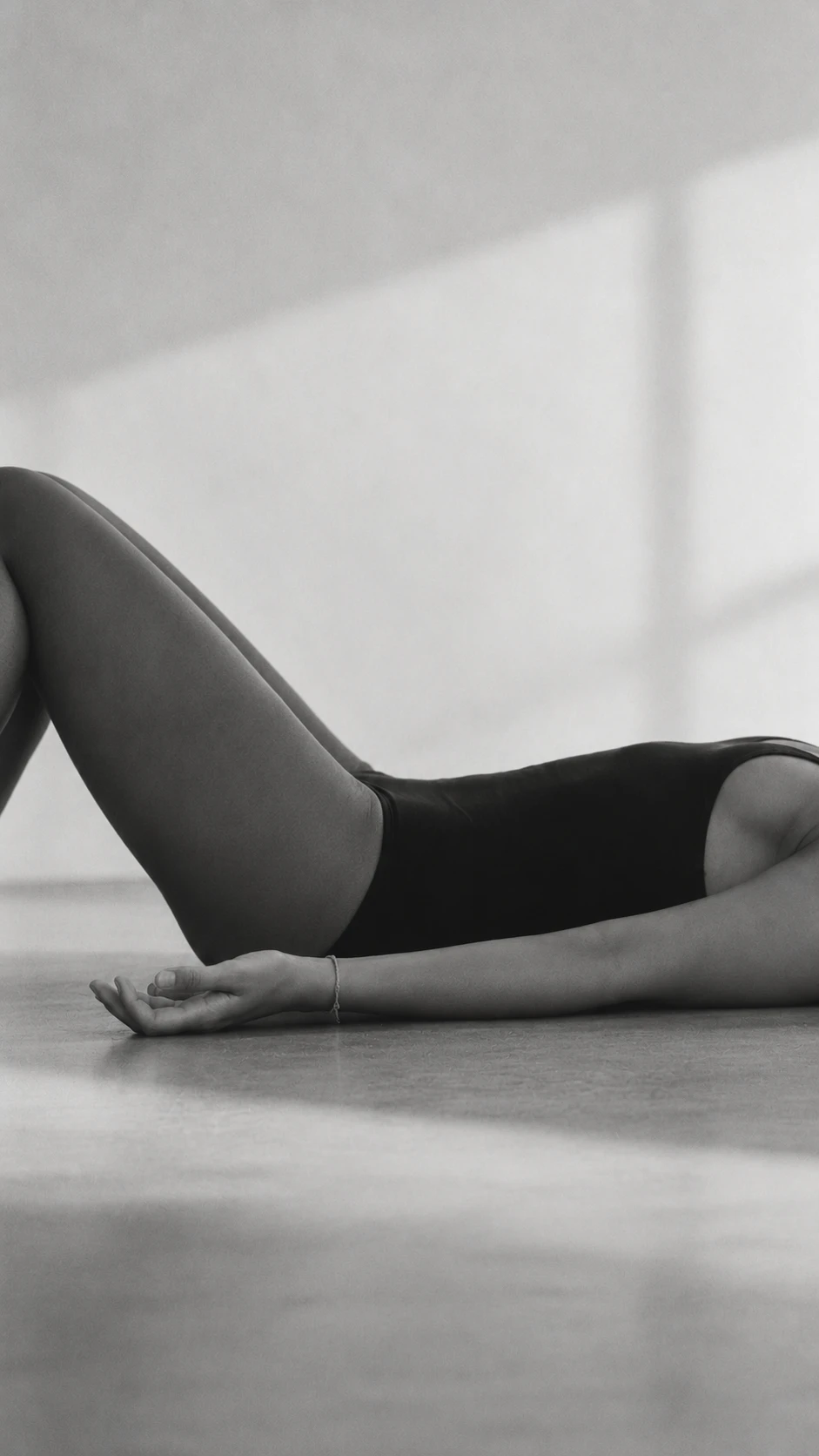
- Lie flat on the back with the arms a little away from the body, palms facing up, the legs slightly apart, head and spine in one line. Close the eyes. Let the whole body settle and stop all movement. Become aware of the natural breath and let it become slow and rhythmic. If the mind wanders, count the breaths backwards from twenty-seven, and simply begin again when you lose count.
- Suggested duration
- Five to ten minutes at the end of practice, or longer on its own.
- When to practise
- After āsana and prāṇāyāma, before Yoga Nidra, or whenever the body needs to rest.
- Precautions
- None. In pregnancy, if lying on the back is uncomfortable, lie on the left side with support under the head and between the knees.
Sitting quietly
A short meditation on the breath · inner observation
- What it is
- A simple beginning to meditation: steadiness of the body, then awareness of the breath. Nothing to achieve.
- How to practise
- Sit comfortably with the spine straight and the hands resting on the knees or in the lap. Close the eyes. Become aware of the whole body sitting, and decide to stay still. Then bring attention to the breath moving in and out at the nostrils. When the mind drifts, notice, and return to the breath without judgement.
- Suggested duration
- Five minutes to begin; ten or fifteen with time.
- When to practise
- After Śavāsana, early in the morning, or before sleep.
- Precautions
- None. Sit on a cushion or a chair if the floor is uncomfortable.
Sources
- Swami Satyananda Saraswati, Asana Pranayama Mudra Bandha (Yoga Publications Trust)
- Swami Satyananda Saraswati, Yoga Nidra (Yoga Publications Trust)
Aura Shanti draws on these teachings with gratitude and is an independent practice, not an official Satyananda Yoga or Bihar School of Yoga centre.